
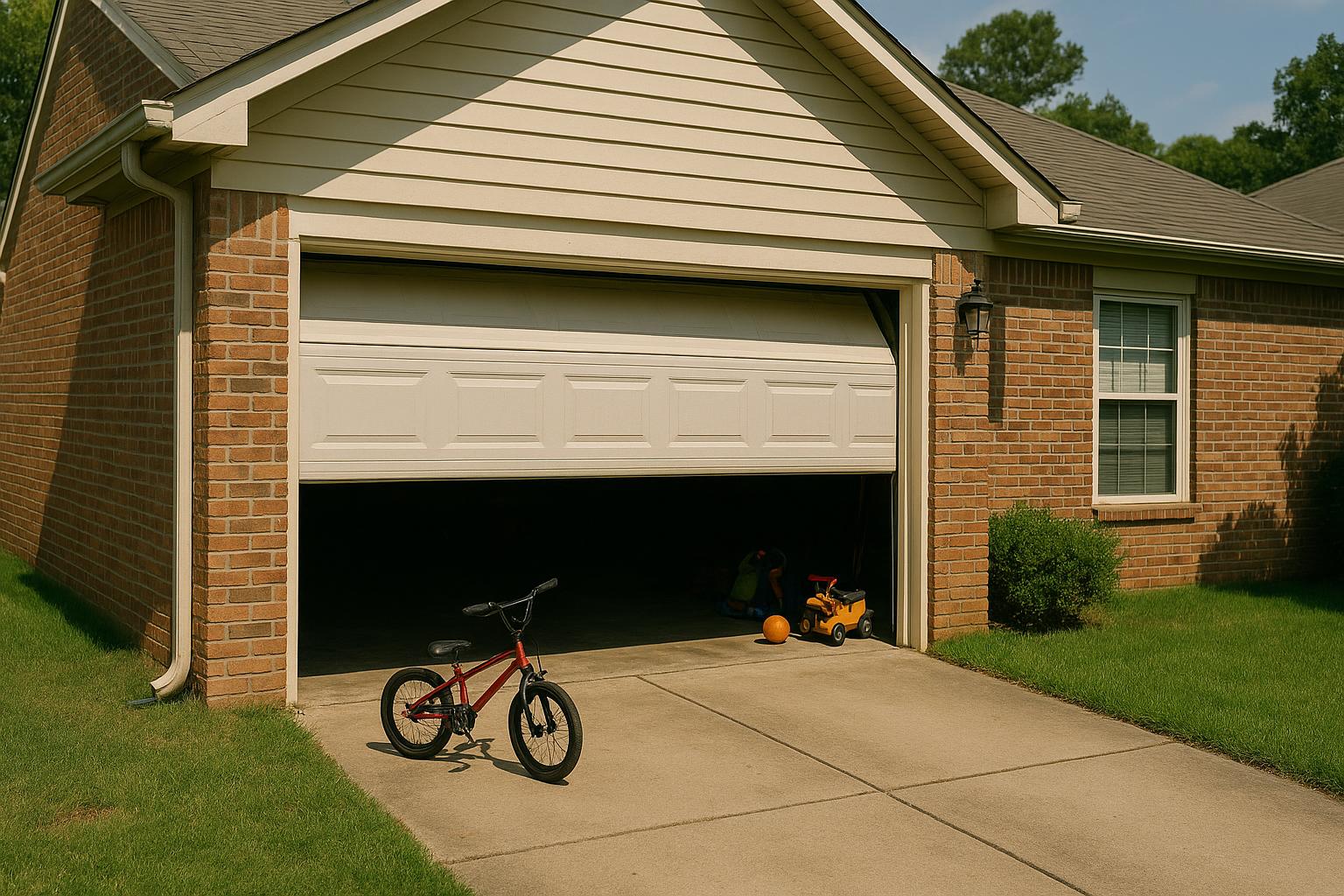
Your Garage Door Is the Biggest Moving Thing in Your Home
Most homeowners in Montgomery don't think twice about their garage door — until something goes wrong. But here's a fact that deserves attention: your garage door is likely the single heaviest, most powerful piece of moving equipment in your entire house. A standard residential garage door weighs between 150 and 400 pounds, and the mechanical systems that move it generate tremendous force.
For families with young children, that combination of weight, force, and daily use creates real risks. According to the U.S. Consumer Product Safety Commission, thousands of people are injured by garage doors every year, and children are disproportionately affected. The good news is that most garage door injuries are entirely preventable with the right precautions.
If you're raising a family in Montgomery, Prattville, Pike Road, or anywhere in the River Region, here's what you need to know about keeping your kids safe around the garage door.
Understanding the Risks
Before diving into solutions, it helps to understand exactly what makes garage doors dangerous for children:
- Crushing hazard: A closing garage door can exert enough force to cause serious injury. Children who run under a closing door or place their hands near the bottom edge are at risk.
- Entanglement: Exposed springs, cables, and moving hardware can catch clothing, fingers, or hair.
- Pinch points: The hinges between garage door panels create pinch points that can trap small fingers as the door moves.
- Remote access: Wall-mounted buttons and remote controls can tempt children to play with the door unsupervised.
- Falling doors: A garage door with a broken spring or worn cable can fall suddenly and without warning.
Test Your Auto-Reverse Safety Features
Since 1993, federal law has required all garage door openers sold in the United States to include auto-reverse mechanisms. Your opener should have two types:
Mechanical Auto-Reverse
Place a 2x4 board flat on the ground in the path of the closing door. When the door contacts the board, it should immediately reverse direction and open back up. If it doesn't, your opener needs adjustment or repair.
Photoelectric Sensors
These are the small sensors mounted near the floor on either side of your garage door opening. They project an invisible beam across the doorway, and if anything breaks that beam while the door is closing, the door should reverse. Test this by waving a broom handle through the beam while the door is closing. If the door doesn't reverse, the sensors may be misaligned, dirty, or malfunctioning.
We recommend Montgomery homeowners test both of these safety features once a month. It takes less than a minute and could prevent a serious accident.
Mount the Wall Button Out of Reach
The wall-mounted garage door button should be installed at least five feet above the floor — high enough that small children can't reach it. This is actually the standard recommended by garage door opener manufacturers, but many homes have buttons mounted lower, especially if they were installed before children came along.
If your button is within a child's reach, having it relocated is a simple and inexpensive job. It's one of the easiest safety upgrades you can make.
Secure Remote Controls
Garage door remotes are fascinating toys for kids — they push a button and a giant door magically moves. That fascination is exactly what makes them dangerous. Keep remote controls out of children's reach at all times. Avoid leaving them on low tables, countertops, or anywhere a child can grab one.
If you use a vehicle-mounted remote or a keypad, make sure children understand that these are not toys. For very young children who can't yet understand that rule, simply keeping remotes locked in the glove compartment when the car is parked at home can eliminate the temptation.
Upgrade to a Modern Garage Door Opener
If your garage door opener is more than 15 to 20 years old, it may lack the safety features that come standard on newer models. Modern openers include:
- More sensitive auto-reverse systems
- Timer-to-close features that automatically shut the door after a set period, reducing the chance it's left open
- Smartphone connectivity that lets you monitor whether the door is open or closed from anywhere
- Battery backup systems that keep safety features working during power outages
Many families in Montgomery have upgraded their openers not because the old one stopped working, but because the newer safety and smart features gave them peace of mind. If your opener predates the 1993 federal safety mandate, replacing it should be a top priority.
Eliminate Pinch Points
Traditional garage door panels create gaps at the hinges that open and close as the door moves. These gaps are exactly the right size to catch a small child's finger. Pinch-resistant garage doors use a flush-panel design or tamper-resistant hinge hardware that eliminates these dangerous gaps.
If you're shopping for a new garage door installation, ask about pinch-resistant panel designs. If replacing the entire door isn't in the budget right now, you can also install hinge shields or guards on your existing door to reduce the risk.
Teach Garage Door Safety Early
No amount of hardware can replace good habits. As soon as your children are old enough to understand, teach them these rules:
- Never stand, walk, or run under a moving garage door.
- Never touch the garage door tracks, springs, or cables.
- Never put fingers near the hinges or the bottom edge of the door.
- Never play with garage door remotes or wall buttons.
- Always keep hands and feet clear when the door is moving.
- If something seems wrong with the door — it's making strange noises, moving unevenly, or not closing all the way — tell an adult immediately.
It also helps to establish a household rule that everyone watches the garage door close completely before walking away. This prevents situations where a child or pet wanders into the garage while the door is still in motion.
Keep Up with Regular Maintenance
A well-maintained garage door is a safer garage door. Springs, cables, rollers, and tracks all wear out over time, and worn components are more likely to fail in unpredictable ways. A door with a fraying cable or a weakened spring can drop suddenly — exactly the kind of surprise you don't want around children.
Scheduling annual garage door maintenance is one of the smartest things Montgomery homeowners can do for both safety and longevity. A professional inspection catches worn parts before they fail, ensures safety features are working correctly, and keeps the entire system operating smoothly.
When to Call a Professional
Some garage door safety improvements are simple enough for any homeowner — testing the auto-reverse, relocating remotes, and teaching kids the rules. But others require professional help:
- Relocating a wall-mounted button
- Replacing or realigning photoelectric sensors
- Installing a new garage door opener with modern safety features
- Replacing worn springs, cables, or hardware
- Installing a pinch-resistant garage door
At Montgomery Garage Door Specialists, we work with families across Montgomery, Millbrook, Wetumpka, and the surrounding communities every day. We understand that your garage door isn't just a convenience — it's something your family interacts with multiple times a day, and it needs to be safe for everyone in your household, including the smallest members.
If you're not sure whether your garage door meets current safety standards, or if you'd like a professional to inspect your system and recommend improvements, give us a call. We'll help you make sure your garage door is as safe as it is functional.