
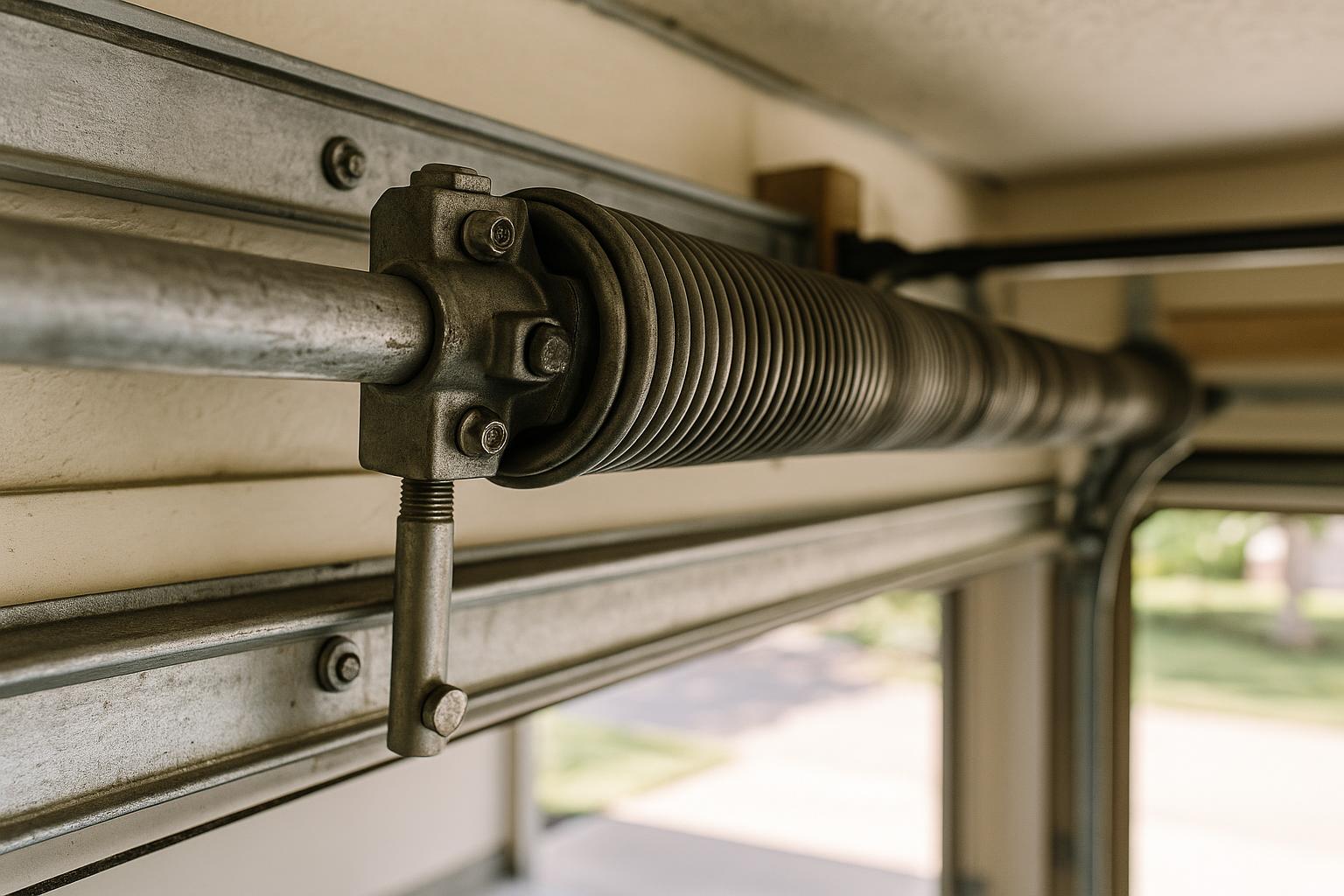
Your Garage Door Springs Are Working Harder Than You Think
Every time you open or close your garage door, the springs do the heavy lifting — literally. A standard garage door weighs between 130 and 350 pounds, and the springs are responsible for counterbalancing all of that weight. Most homeowners in Montgomery never think about their garage door springs until something goes wrong. But knowing the warning signs of worn-out springs can help you avoid a sudden failure that leaves your car trapped inside or your home's security compromised.
At Montgomery Garage Door Specialists, we handle spring replacements every week. Here's what we want every homeowner to know about when and why garage door springs need to be replaced.
How Long Do Garage Door Springs Last?
Garage door springs have a limited lifespan measured in cycles. One cycle equals one full open and one full close. Most standard torsion springs are rated for about 10,000 cycles, which translates to roughly 7 to 10 years of normal use for the average household.
However, several factors can shorten that lifespan:
- Frequent use: If your garage door is the primary entrance to your home, you may be running through cycles faster than average.
- Humidity and temperature swings: Here in Montgomery, our hot, humid summers and occasional cold snaps put extra stress on metal components. Moisture can accelerate rust, which weakens the coils over time.
- Lack of maintenance: Springs that aren't lubricated regularly develop more friction and wear out faster.
- Improper installation: Springs that weren't sized or installed correctly from the start will fail prematurely.
Warning Signs Your Springs Are Wearing Out
Springs rarely fail without giving you some advance notice. Here are the most common signs that your garage door springs are nearing the end of their life.
1. The Door Feels Heavier Than Usual
Try this simple test: disconnect your garage door opener by pulling the emergency release cord, then manually lift the door about halfway. A properly balanced door should stay in place on its own. If it feels unusually heavy or slides back down, your springs are losing tension and can no longer counterbalance the door's weight.
2. The Door Opens Slowly or Unevenly
If your garage door opener seems to struggle or the door rises slower than it used to, weakening springs may be the cause. You might also notice one side of the door lifting faster than the other, which often means one spring has more wear than its partner.
3. Visible Gaps in the Spring Coils
Take a look at the torsion spring mounted above your garage door. A healthy spring has tightly wound coils with uniform spacing. If you see a visible gap or separation in the coils, the spring has already broken or is about to. This is the most obvious sign and means you need a replacement immediately.
4. Loud Bang From the Garage
Many homeowners in the Montgomery area call us after hearing a loud bang in their garage, often mistaking it for something falling off a shelf. In most cases, that sound is a torsion spring snapping. When a spring breaks under tension, it releases a significant amount of energy and produces a startling noise. If this happens, do not attempt to operate the door.
5. The Opener Strains or Stops Mid-Cycle
Your garage door opener is designed to lift a balanced door, not the full weight of the door itself. When springs weaken or break, the opener has to work much harder. You may hear the motor straining, or the opener may stop partway through the cycle and reverse. Over time, this extra load can burn out the opener motor entirely, turning a spring replacement into a much more expensive repair.
6. Rust on the Coils
Rust is a spring's worst enemy. It increases friction between the coils as they expand and contract, which accelerates wear. If you notice rust forming on your springs, it's a good idea to have them inspected. In some cases, regular lubrication can extend their remaining life, but heavily rusted springs should be replaced before they fail.
Why You Should Never Replace Garage Door Springs Yourself
We understand the DIY spirit — it's strong here in Alabama. But garage door spring replacement is one job that should always be left to trained professionals. Here's why:
- Extreme tension: Torsion springs are wound under tremendous force. A spring that releases unexpectedly can cause serious injury or even death.
- Specialized tools required: Proper replacement requires winding bars, clamps, and other tools that most homeowners don't have.
- Precise sizing matters: Springs must be matched to the exact weight and size of your door. The wrong spring will cause balance problems and premature failure.
- Paired replacement: If one spring breaks, the other is likely close behind. A professional will typically recommend replacing both springs at the same time to ensure even balance and avoid a second service call in a few months.
At Montgomery Garage Door Specialists, our technicians handle spring replacements safely and efficiently. We carry a wide inventory of springs on our service trucks, so most replacements can be completed in a single visit.
How Regular Maintenance Extends Spring Life
The good news is that a little preventive care goes a long way. Here are some simple maintenance steps that can help your springs last longer:
- Lubricate the springs: Apply a silicone-based or white lithium grease spray to your torsion springs every six months. This reduces friction and helps prevent rust.
- Schedule annual inspections: A professional tune-up includes checking spring tension, balance, and overall condition. Small adjustments now can prevent big problems later.
- Keep an eye on balance: Perform the manual lift test described above once or twice a year. If the door doesn't hold its position, call for an inspection.
- Address rust early: If you spot surface rust, lubricate the springs right away and monitor them closely.
Our maintenance plans are designed for homeowners throughout Montgomery, Prattville, Millbrook, Pike Road, Wetumpka, and Tallassee who want to keep their garage doors running smoothly year-round without worrying about unexpected breakdowns.
Don't Wait for a Spring to Snap
A broken garage door spring is more than an inconvenience. It can leave your vehicle stuck inside the garage, compromise your home's security, and lead to costly damage to your opener. By recognizing the warning signs early and scheduling a replacement before a failure occurs, you save yourself time, money, and a lot of frustration.
If you've noticed any of the symptoms described above, or if it's been several years since your springs were inspected, give Montgomery Garage Door Specialists a call. We provide honest assessments, upfront pricing, and fast service to homeowners across the Montgomery area. Whether you need an emergency spring replacement or just want peace of mind with a routine inspection, we're here to help.