
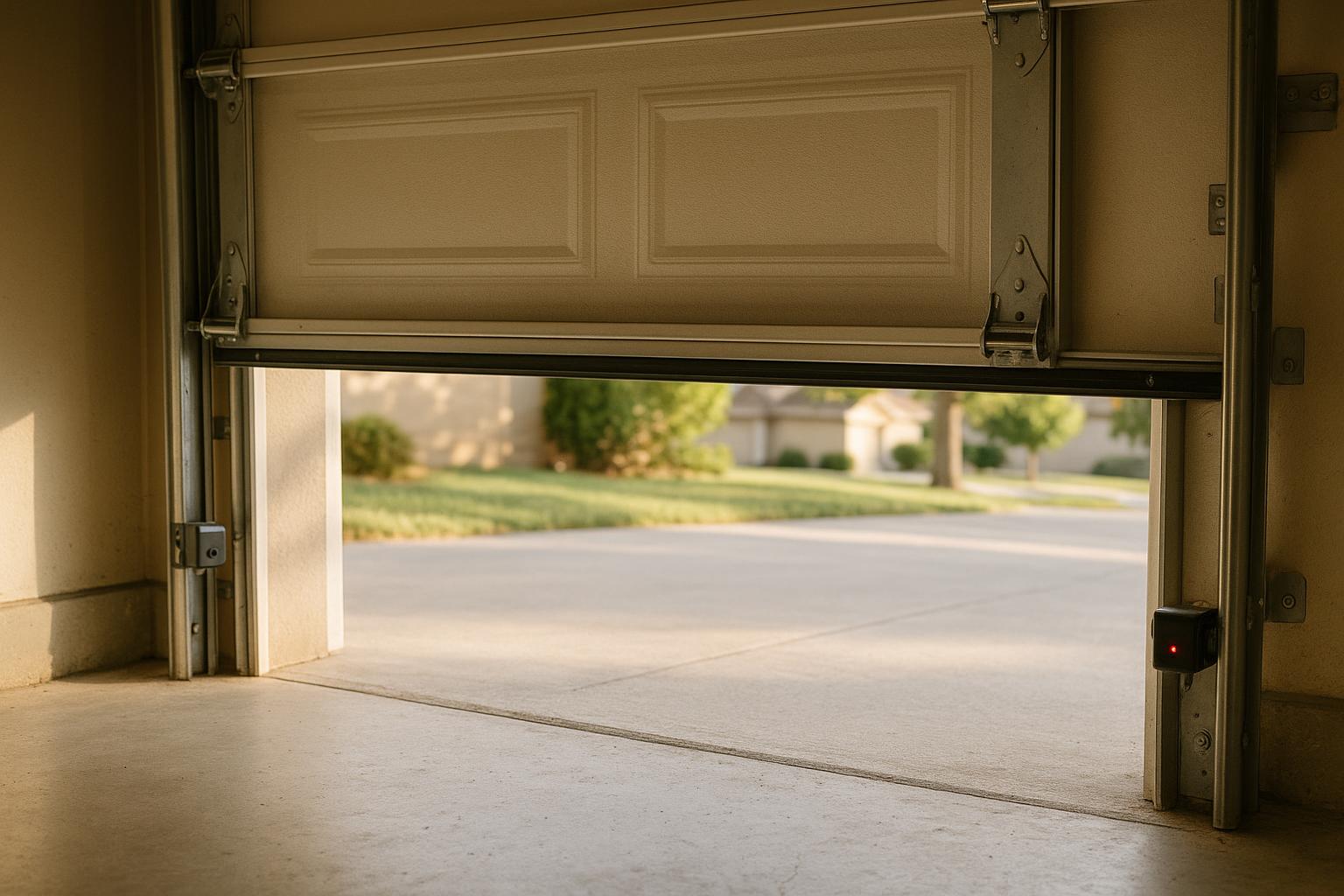
That Frustrating Moment When Your Garage Door Won't Stay Closed
You press the button on your remote, the garage door begins its descent, and then — just inches from the floor — it stops and reverses right back up. You try again. Same result. Maybe you try holding the wall button down, and it still won't cooperate. If you're a homeowner in Montgomery dealing with this exact scenario, you're not alone. This is one of the most common garage door complaints we hear, and the good news is that it's almost always fixable.
At Montgomery Garage Door Specialists, we've diagnosed this issue hundreds of times across homes in Montgomery, Prattville, Pike Road, and surrounding areas. Let's walk through the most likely causes and what you can do about each one.
Understanding Why Your Garage Door Reverses
Modern garage doors are equipped with safety mechanisms that prevent them from closing on people, pets, or objects. These systems are required by federal law and have prevented countless injuries since they became standard in the 1990s. However, when something goes wrong with these safety features — or with the door's mechanical components — the door may reverse even when there's nothing in its path.
Here are the most common reasons your garage door reverses before reaching the floor.
1. Misaligned Safety Sensors
This is the number one cause of a garage door that reverses unexpectedly. Every modern garage door opener has two photo-eye sensors mounted near the bottom of the door tracks, one on each side. These sensors send an invisible beam across the opening. If anything breaks that beam, the door reverses to avoid crushing it.
Over time, these sensors can get bumped, shifted, or knocked out of alignment. Even a small vibration from daily use or a nudge from a bicycle tire can throw them off. When the sensors can't communicate properly, the opener interprets it as an obstruction and reverses the door.
What to check:
- Look at the LED lights on each sensor. Most sensors have a steady green light on one side and a steady amber or green light on the other. If either light is blinking, the sensors are misaligned.
- Gently adjust the sensors until both lights are solid and steady.
- Make sure nothing is blocking the beam — cobwebs, dirt, leaves, or even direct sunlight can interfere with the signal.
- Clean the sensor lenses with a soft cloth.
2. The Close-Limit Switch Needs Adjustment
Your garage door opener has a setting called the close-limit switch (sometimes called the travel limit). This tells the opener how far the door needs to travel before it's fully closed. If this setting is off — even slightly — the opener may think the door has hit an obstruction when it's actually just reaching the floor. In response, it reverses.
This is especially common after a new opener installation or when springs have been replaced, because the door's travel distance may have changed slightly.
What to check:
- Consult your opener's manual for instructions on adjusting the down-limit setting. Most units have a small screw or dial on the back of the motor housing.
- Make small adjustments — usually a quarter turn at a time — and test the door after each change.
- If you're not comfortable making this adjustment, a professional can dial it in quickly.
3. Worn or Broken Springs
Garage door springs do the heavy lifting — literally. They counterbalance the weight of the door so the opener doesn't have to work as hard. When springs wear out, lose tension, or break, the door becomes significantly heavier. The opener senses this extra resistance and may interpret it as an obstruction, triggering the auto-reverse feature.
If your door feels unusually heavy when you try to lift it manually, or if you notice a gap in one of the torsion springs above the door, spring failure is likely the culprit.
Important safety note: Garage door springs are under extreme tension and can cause serious injury if handled improperly. Spring replacement is not a DIY job. If you suspect a spring issue, call a professional. Our team handles spring replacements throughout Montgomery and the surrounding communities every day.
4. Obstructions in the Track
Sometimes the answer is simpler than you'd expect. Small debris, a bent track section, or even a buildup of grime and old lubricant can create enough resistance to trigger the opener's safety reverse. The door may travel most of the way down before hitting the trouble spot and bouncing back up.
What to check:
- Visually inspect both tracks from top to bottom. Look for dents, bends, or debris.
- Wipe down the inside of the tracks with a clean rag.
- Check that the rollers are moving freely and aren't cracked or worn.
- Make sure no hardware has come loose and is protruding into the track path.
5. Damaged or Worn Rollers
Garage door rollers guide the door along the tracks as it opens and closes. When rollers crack, chip, or seize up, they create friction and resistance. This can cause the door to bind or hesitate during travel, which the opener may read as an obstruction. Nylon rollers tend to last longer and operate more quietly than steel rollers, but all rollers eventually wear out with regular use.
If you hear grinding, scraping, or popping sounds when the door moves, worn rollers could be contributing to the reversal problem.
6. Issues with the Opener's Force Settings
In addition to travel limits, most garage door openers have adjustable force settings that control how much power the motor uses to open and close the door. If the closing force is set too low, the opener may not have enough power to push the door all the way down, especially during temperature changes that cause metal components to expand or contract. Alabama's hot summers and cool winters can definitely affect how your door operates throughout the year.
What to check:
- Locate the force adjustment controls on your opener — typically small dials or screws labeled "open force" and "close force."
- Increase the close force slightly and test the door.
- Be careful not to set the force too high, as this could override the safety reverse feature and create a hazard.
When to Call a Professional
Some of these fixes are straightforward enough for a handy homeowner to tackle. Cleaning sensors, removing debris from tracks, and making minor adjustments to limit switches are all reasonable DIY tasks. However, there are times when calling a professional is the smarter — and safer — choice:
- You suspect a broken or weakened spring
- The tracks are visibly bent or damaged
- You've tried the basic troubleshooting steps and the door still reverses
- The opener is making unusual noises or behaving erratically
- You're unsure about adjusting force or limit settings
At Montgomery Garage Door Specialists, we offer same-day service for most repair calls. Whether you're in Wetumpka, Millbrook, Tallassee, or right here in Montgomery, we'll diagnose the issue, explain your options, and get your door working properly — usually in a single visit.
Don't Ignore a Reversing Garage Door
A garage door that won't close isn't just an inconvenience — it's a security risk. An open garage is an invitation for theft, pests, and weather damage. It also means your home's largest entry point is unprotected. If your garage door keeps reversing and you can't resolve it with basic troubleshooting, don't wait for the problem to get worse.
Give us a call or schedule a service appointment online. Montgomery Garage Door Specialists is here to help you get back to a door that works the way it should — every single time you press that button.